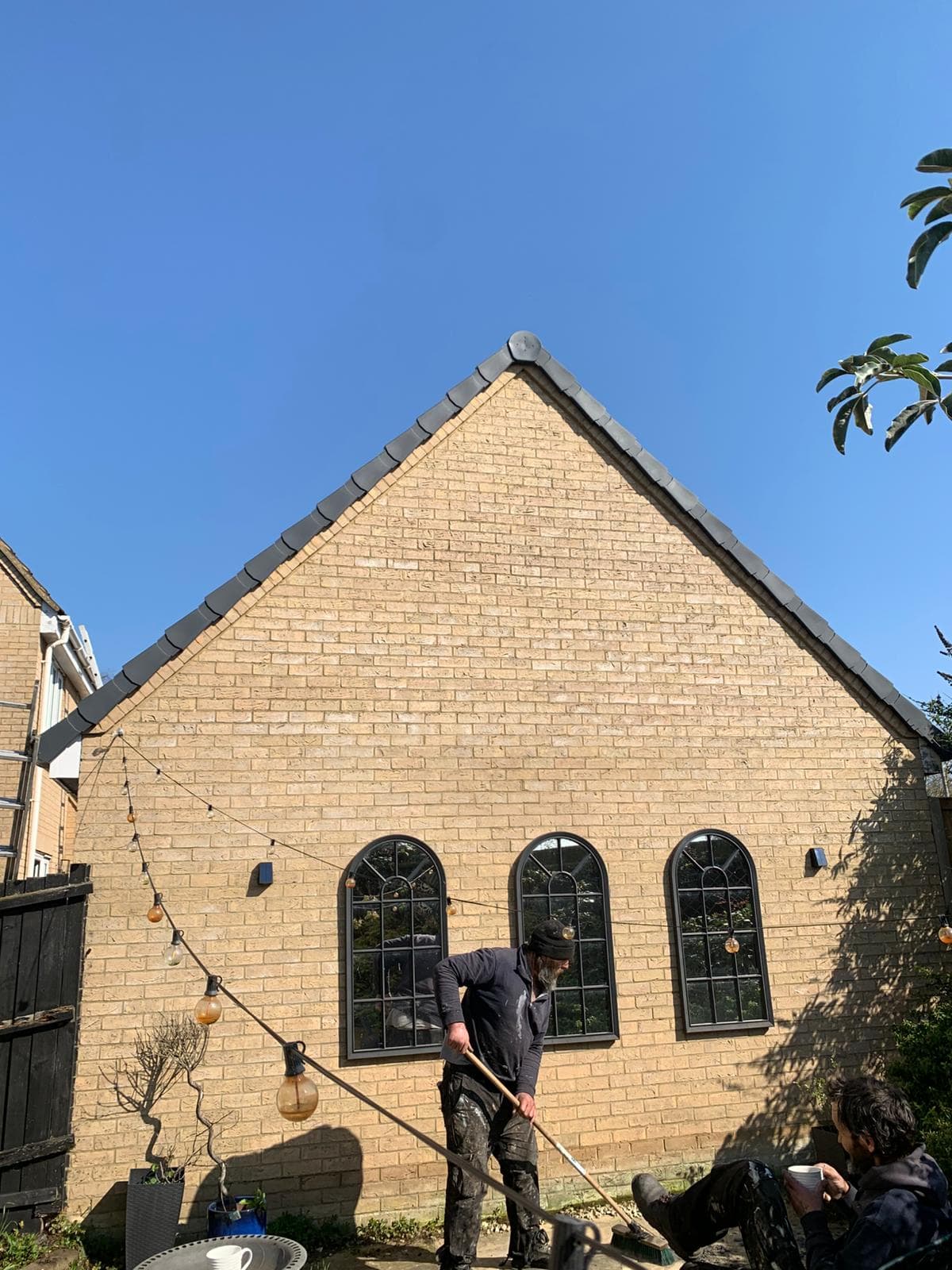
Roofs
Repairing, replacing and upgrading the roof above your home.
A roof protects against rain, wind, snow and sun while providing insulation and ventilation. Renovation work ranges from replacing a few tiles and resealing flashing through to a full re-roof with new underlayment, structural repairs and upgraded insulation.
Common Damage
1. Leaks & Water Ingress
- Water entering through broken tiles or worn seals
- Causes damp, mould and ceiling stains
- Often spreads far from the original entry point
2. Missing or Broken Tiles
- Storm damage or aged fixings
- Leaves underlayment exposed to weather
- Loose tiles become a falling hazard
3. Sagging & Structural Weakness
- Indicates failed rafters or trusses
- Often follows long-term water damage
- Can lead to partial collapse if untreated
4. Flashing & Gutter Failure
- Lead or metal flashing around chimneys, vents and skylights fails
- Blocked or broken gutters cause overflow
- Water tracks down walls and into the foundation
Repairs
minor Repairs
- Replace individual tiles or shingles
- Seal small leaks with roofing cement or membrane patches
- Reseal or replace flashing around chimneys and vents
moderate Repairs
- Replace sections of roofing material
- Renew underlayment in affected zones
- Repair rafters, battens and minor structural elements
major Repairs
- Reinforce or replace damaged beams and rafters
- Treat or replace rotted timber wholesale
- Full re-roof with new structure, underlayment and covering
New Installation
When Replacement Is Needed
- Roof is 20–50 years old (depending on material)
- Repeated leaks across multiple areas
- Structural issues with rafters or decking
- New build, extension or loft conversion
Installation Steps
Strip Existing Roof
- Remove tiles, underlayment and flashing
- Inspect rafters and decking
Structural Repairs
- Replace rotted or weakened timber
- Reinforce trusses where needed
Waterproof Membrane
- Lay breathable underlayment
- Detail around valleys and penetrations
Battens & Covering
- Fit treated battens to gauge
- Lay tiles, slates or chosen covering
Flashing & Ventilation
- Form lead flashing at abutments
- Install ridge and eaves vents
Final Inspection
- Check fixings, alignment and weather seals
- Test gutters and downpipes
Lifespan
- Clay or concrete tiles
- 60+ years
- Natural slate
- 100+ years
- Asphalt shingles
- 20–30 years
- Metal roofing
- 40–70 years
- Flat roof (EPDM/fibreglass)
- 20–30 years
Warning Signs
- Damp patches on upstairs ceilings
- Daylight visible from inside the loft
- Granules or debris in the gutters
- Sagging ridge line or visible dips
- Repeated repairs in the same area
Other Renovations Services
Walls (Removal & Addition)
Opening up rooms, adding partitions and repairing finishes.
Floors
Reinforcing joists, replacing rotten boards and laying new floors.
Insulation
Cutting heat loss, controlling condensation and lowering energy bills.
Damp-Proofing
Stopping rising, penetrating and condensation damp at source.
Electrical Systems
Rewires, consumer units, lighting and smart home upgrades.
Pipes & Plumbing
Hot and cold supply, waste runs and leak repairs.
Need Help With Roofs?
Get in touch for a free, no-obligation quote. We'll survey the job and talk you through the options.
Get Your Free Quote